
Web Design
September 21, 2025
A good sports website is not just visually appealing. It helps people understand your organization, trust your programs, and take the next step with confidence.
A lot of sports organizations judge their website by one question: Does it look good?
That matters, but it is not enough.
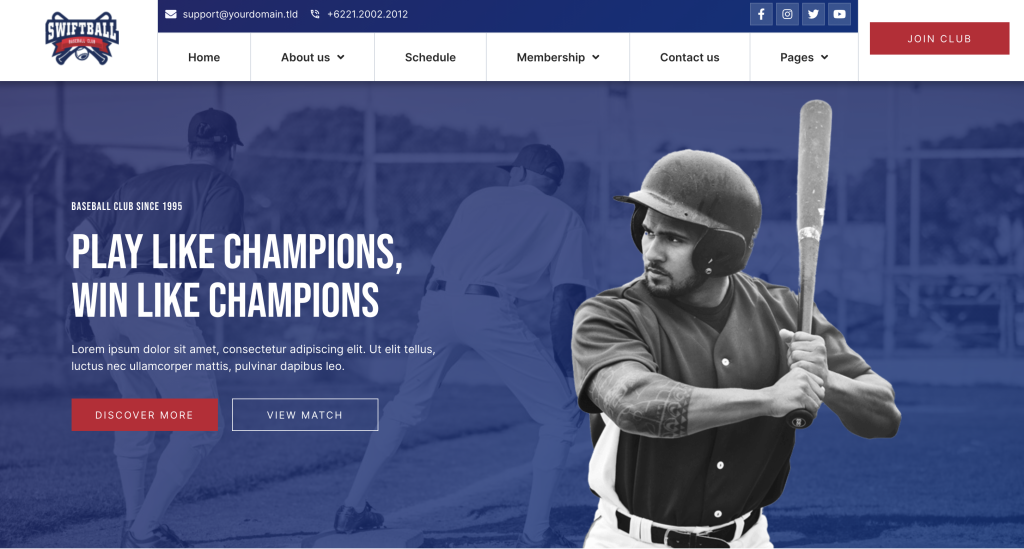
An effective sports website is not just a digital brochure. It is a communication tool, a trust-building asset, and often the main place where people decide whether your organization feels credible and organized.
If the website fails in those areas, even a good program can appear less established than it really is.
Clarity comes first
Visitors should not have to work hard to understand what your organization does.
Within a few seconds, they should be able to answer:
- What is this organization?
- Who is it for?
- What programs or services are offered?
- Where is it based?
- How do I get involved?
Too many sports websites bury important details under unclear menus, thin content, or generic messaging. A website becomes more effective when it makes key information obvious and easy to access.
Trust is built through structure
Trust does not come only from testimonials or bold claims. It is built through how organized the website feels.
A strong sports website should make the organization appear: active, well-managed, clear in its communication, and confident in its presentation.
That means using: clean layout, updated information, consistent branding, clear calls to action, and practical navigation.
When visitors feel lost or uncertain, trust drops quickly.
Design should support function
Many organizations focus so much on design that they forget usability.
A visually impressive homepage means very little if parents cannot find schedules, if event details are missing, or if the registration process is unclear.
The best websites balance presentation with utility. They look professional, but they also help visitors complete actions easily.
Content matters more than many people think
Search visibility, SEO strength, and user trust all depend heavily on content.
If your homepage has almost no real information, or your key pages are too thin, the website becomes less useful to both people and search engines. Good content helps your organization explain its value clearly while also improving discoverability.
Strong content includes: program descriptions, event details, location information, staff or leadership information, FAQs, and clear next-step guidance.
The site should support growth
A sports website should not only reflect the current organization. It should also support future growth.
That means being prepared to handle: more inquiries, more registrations, more event promotion, more content updates, and a stronger brand presence over time.
A website that cannot grow with the organization usually becomes a problem quickly.
Final thoughts
A good sports website is one that helps people trust you, understand you, and take action.
It should make your organization look more established, communicate more clearly, and support visibility and growth over time. Design matters, but effectiveness comes from the combination of structure, content, usability, and professionalism.
That is what turns a website from a nice-looking page into a real business asset.
Need a more effective website for your sports organization? Contact Touchline to discuss website design, SEO, and digital support.
Related News
Search
Category
Recent Additions

Let’s Build Something Stronger
Ready to Grow Your Sports Organization?
Professional websites, marketing, PR, media, and systems support built for sports.

Marketing, media, PR, and systems support for sports organizations ready to grow more professionally.
- Orlando, FL · Warsaw, Poland
- hello@touchlinesystems.com
- +1 (407) 610-2424
- +48 459 569 448
Services
Quick Links
- About Touchline
- Our Services
- Book a Strategy Call
- Sports Travel by Talon Travel
- Accessibility Statement
- Privacy Policy